New-Build Homes in the UK: Drying Out Construction Moisture in Year One
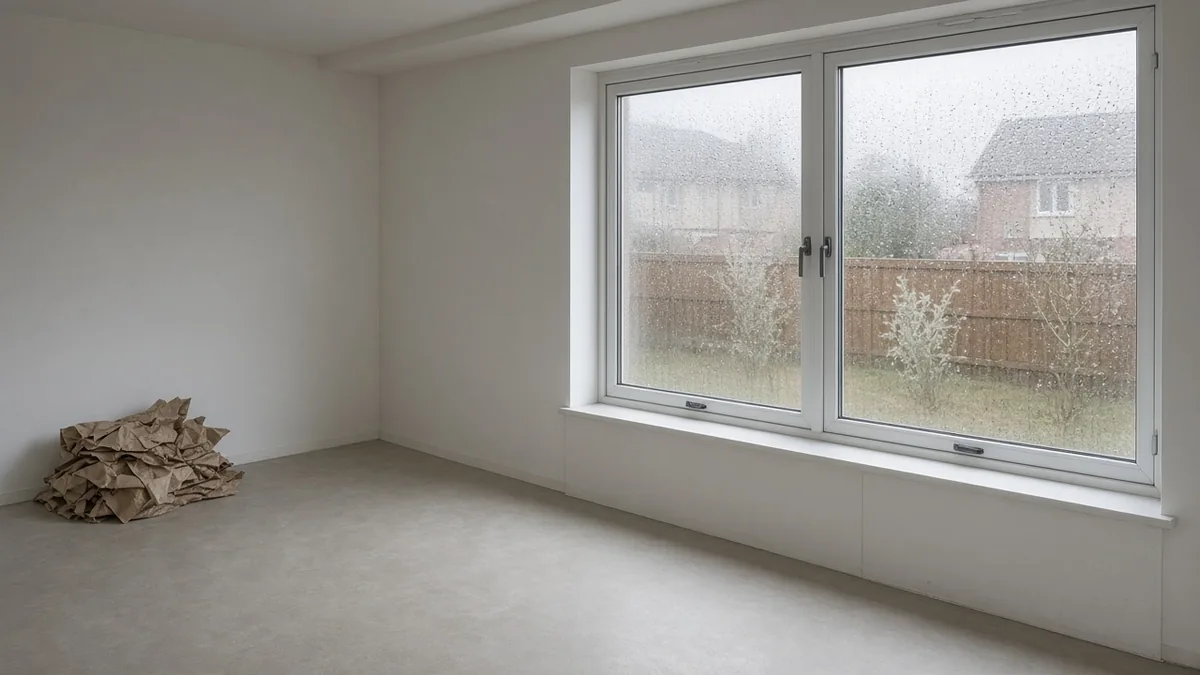
NHBC says up to 8,000 litres of water can go into building a new home, and that a new home should reach a moisture-balanced state within 18 months to 2 years. Because modern homes are insulated and draught-proofed, that moisture and everyday steam escape slowly, so keep trickle vents open, run extractors, heat evenly rather than hot, avoid drying clothes on radiators, and use a dehumidifier if condensation persists. Ongoing damp or mould is not normal and should be reported to your builder.
New-build homes are sold on being warm, efficient and low-maintenance, so it comes as a shock when the first winter brings streaming windows, damp-smelling wardrobes and the odd spot of mould in a bedroom corner. In most cases nothing is wrong with the house: it is still drying out from being built, while also being much better sealed than the older homes most of us grew up in.
This guide explains where the water comes from, how long the process should take, and what you can do in each phase of the first two years. It is written for owners and tenants of newly completed houses and flats in the UK.
Where All the Water Comes From
Construction moisture
NHBC's Moisture in New Homes guide states that a lot of water is added during construction, particularly from concreting, laying screed floors, bricklaying, plastering and painting. It estimates up to 8,000 litres of water, about 800 full buckets, may go into mixtures and materials, depending on the design of the home (NHBC: Moisture in New Homes). Rain that soaks the structure before the roof and walls are finished adds more.
Much of this escapes directly outdoors, but some evaporates inside as the plaster, screed and timber dry. NHS inform notes that a newly built home may be damp if the water used to build it, for example in the plaster, is still drying out (NHS inform).
Everyday living
On top of that comes the moisture every household produces. NHBC's comparison of typical households shows how wide the range is:
| Household (NHBC example) | Breathing | Cooking | Showering | Drying clothes | Total (approx.) |
|---|---|---|---|---|---|
| Working couple, tumble dry or dry outdoors | 550 L/yr | 250 L/yr | 180 L/yr | Zero | About 100 buckets |
| Retired couple, washing dried indoors | 790 L/yr | 1,020 L/yr | 180 L/yr | 160 L/yr | About 215 buckets |
| Family of four (two teenagers), washing dried indoors | 1,110 L/yr | 770 L/yr | 360 L/yr | 550 L/yr | About 280 buckets |
Source: NHBC Moisture in New Homes. NHBC adds that households generating the most moisture will be closer to the limits their homes are designed for, particularly while construction moisture is drying out.
Why Airtight Homes Struggle More at First
NHBC's condensation leaflet explains the trade-off: better insulation, draught-proofing and sealed window units stop heat escaping, but they also reduce water vapour escaping, which can increase the risk of condensation (NHBC: Condensation in your home). An older draughty house loses moisture through gaps whether you like it or not. A modern home relies on its designed ventilation, trickle vents, extract fans or a whole-house system, being used as intended.
That is why blocking trickle vents to stop a "draught", or switching off a noisy extract fan, can tip a new home into condensation trouble quickly.
How Long Should Drying Out Take?
NHBC gives two timescales, and they measure different things:
- Around nine months to a year for materials to dry out and settle, according to NHBC's Guide to your new home. During this period minor shrinkage cracks, gaps in joinery and white deposits on walls are normal (NHBC: Guide to your new home).
- 18 months to 2 years to reach a fully moisture-balanced state, according to Moisture in New Homes. After that, heating and ventilation should cope with normal household moisture without obvious dampness.
If you move in during winter, expect condensation to be more noticeable at the start, since cold outdoor temperatures make windows and outside walls colder.
A Year-One Plan for New-Build Owners
Months 1–3: learn your ventilation
- Read the builder's information on your ventilation system. NHBC says it should explain how to expel excess moist air, including whether extract fans can run longer or have a boost function.
- Keep trickle vents open whenever rooms are occupied, even in winter with the heating on.
- If you have MVHR, follow the manufacturer's instructions and use boost mode when the air seems damp.
- Run extractors during and after cooking and bathing. NHBC suggests keeping the fan on, or window open, for about 20 minutes afterwards with the door closed.
Months 1–12: heat gently and evenly
NHBC warns that shrinkage is accelerated by heat, so do not turn central heating to its highest setting to "speed things up". Instead, it recommends an even temperature throughout the home, programming heating to come on before you return in the evening, and keeping unused rooms heated to a low temperature rather than leaving them cold. Cold rooms are where condensation and mould settle.
All year: cut moisture at source
- Put lids on pans.
- Avoid drying clothes on radiators. If you must dry indoors, NHBC suggests opening the window and closing the door of the drying room.
- Make sure a vented tumble dryer is ducted outside.
- Keep wardrobes against internal walls where possible, leave a gap behind furniture, and don't overfill cupboards.
- Wipe condensation off windows as soon as it appears. Our dew point guide explains why glass mists first.
Where a Dehumidifier Fits In
NHBC's guidance does not mention dehumidifiers; its emphasis is on ventilation, heating and moisture reduction. Energy Saving Trust suggests considering a dehumidifier for excessive moisture or for drying washing inside (Energy Saving Trust). In a new build, that makes one useful in three situations:
- You dry washing indoors and have no tumble dryer or outdoor space.
- A hygrometer shows high humidity even with vents open and extractors working.
- One room, often a north-facing bedroom, keeps getting condensation while the rest of the house is fine.
Because new builds are heated, a compressor model is normally the efficient choice; our compressor vs desiccant guide explains why. Options in our catalogue (Amazon UK prices checked 26/11/2026 06:17 GMT; running costs at the Ofgem cap of 26.32p/kWh for 1 October to 31 December 2026, source):
| Model | Extraction | Power | Noise | Cost per hour | Price |
|---|---|---|---|---|---|
| MeacoDry ABC 12L | 12 L/day | 165 W | 36 dB | 4.34p | £119.99 |
| Pro Breeze OmniDry 20L | 20 L/day | 330 W | 36 dB | 8.69p | £149.99 |
| MeacoDry Arete Two 20L | 20 L/day | 230 W | 38 dB | 6.05p | £280.89 |
For a flat or small house, a 12L unit placed centrally with internal doors open is often enough. For a three- or four-bedroom home with indoor laundry, a 20L model gives more headroom. Our new-build condensation picks and 3-bed semi guide compare more models, and the running cost guide covers 8-hour and 24-hour costs.
Track progress with a logging hygrometer such as the Wi-Fi Govee H5179 (£16.99, checked 26/11/2026 06:17 GMT), which offers cloud history and CSV export. Readings that fall month by month show the house is drying as expected.
When It Is Not Just Drying Out
NHBC is clear that a new home should not be damp, and its decision tree points you back to the builder for leaks and defects. Contact your builder if you notice:
- A damp patch that grows, especially after rain, which suggests a rainwater or plumbing leak.
- A tidemark along the bottom of a wall, which Energy Saving Trust associates with rising damp.
- Mould that keeps returning or spreading despite following the ventilation and heating advice.
- Extract fans, trickle vents or MVHR that don't appear to work.
Keep dated photos and hygrometer logs; they make it much easier to show the problem persists despite sensible use. If mould has appeared, our safe black mould cleaning guide covers removal, and tenants in new-build rentals can use our Awaab's Law guide.
The Bottom Line
A new home carries thousands of litres of construction water and is built to keep air in. For the first one to two years, use the ventilation you have, heat gently and evenly, limit indoor drying, and add a dehumidifier if your humidity readings stay stubbornly high. Condensation that gradually fades is normal; damp that spreads is a defect to report.
Recommended In-Stock Models & Running Costs
Only models currently in stock on Amazon UK are shown below. Adjust the electricity rate to match your tariff.
| Model | Category | Power | Cost / hr | 8h Cycle | Amazon UK Price | Action |
|---|---|---|---|---|---|---|

Meaco MeacoDry ABC 12L Dehumidifier
12L/day
·
36 dB
|
Compressors | 165 W | 4.34p/hr | £0.35 | £119.99 90-DAY LOW Price accurate as of 28/11/2026 04:49 GMT | Check price on Amazon |
| Compressors | 330 W | 8.69p/hr | £0.69 | £149.99 90-DAY LOW Price accurate as of 28/11/2026 04:49 GMT | Check price on Amazon | |
| Hygrometers | — | — | — | £16.99 90-DAY LOW Price accurate as of 28/11/2026 04:49 GMT | Check price on Amazon |


Product prices and availability are accurate as of the date/time indicated and are subject to change. Any price and availability information displayed on Amazon.co.uk at the time of purchase will apply to the purchase of this product.
Frequently Asked Questions
Is condensation normal in a new-build house?
Some condensation is common in the first year. NHBC explains that building materials such as mortar and plaster contain a lot of moisture that evaporates as the home is lived in and heated. NHBC also states that a new home should not be damp, so persistent damp patches, or mould that is getting worse, should be investigated.
How long does a new-build take to dry out?
NHBC's Guide to your new home says drying out generally takes around nine months to a year, depending on how the home was built and the weather when you move in. Its Moisture in New Homes guide says you should expect the home to reach a fully moisture-balanced state within 18 months to 2 years.
Should I turn the heating up high to dry my new home faster?
No. NHBC advises against turning central heating to its highest setting, because shrinkage is accelerated by heat and drying too fast increases cracks and gaps in joinery. Keep an even, moderate temperature throughout the home and let ventilation carry the moisture away.
Do I need a dehumidifier in a new-build?
Not always. NHBC's guidance focuses on ventilation, even heating and reducing moisture, and does not mention dehumidifiers. Energy Saving Trust suggests considering one for excessive moisture or drying washing indoors. If a hygrometer shows high humidity despite open vents and working extractors, a 12L to 20L compressor dehumidifier is a practical extra step.
More UK Damp & Running-Cost Guides
Why Condensation Forms on the Inside of UK Windows (Dew Point Explained)
Condensation forms on the inside of a window when the glass is colder than the dew point of the room air, so water vapour turns back into droplets on it. At 20°C and 60% relative humidity the dew point is roughly 12°C, so any pane or frame colder than about 12°C will mist up. Bringing the dew point down (less moisture, more ventilation, a dehumidifier) or warming the glass is the only way to stop it.
How to Clean Black Mould Safely Without Spreading Spores Around Your Home
Wear gloves, goggles and a mask over your nose and mouth, open the window but close the door to the rest of the house, then wipe the mould while it is wet using a mould and mildew product (GOV.UK advises these in preference to bleach) and a disposable cloth. Never brush, dry-wipe or vacuum mould. Bag the cloth and mask afterwards, and leave patches larger than about 1 m², or mould caused by leaks, to a professional or your landlord.
Compressor vs Desiccant Dehumidifier: Which Works Best in British Homes?
Choose by room temperature: Meaco's rule of thumb is a desiccant below 10°C, a desiccant or large 20L–25L compressor between 10°C and 15°C, and any type above 15°C. Compressors are generally cheaper to run in heated homes (the in-stock 12L models in our dataset draw 151–200 W), while desiccants keep working in cold garages and conservatories (our desiccant models are rated from 1°C) and blow out noticeably warmer air.